Picture your first Korea morning when you want to fund the right balance before the first tap
Picture your first morning in Korea when you have just enough time for one station ride, one coffee stop, and one small purchase before the day gets busy. The card in your pocket is not the question. The real question is which balance should be funded first so you do not stand at a reader guessing whether transit or spending money is supposed to do the work.
That is where HANKATONG CARD becomes practical rather than abstract. It is one physical prepaid card for Korea travel, but it keeps transport and spending in separate balances, with card management in the HANKATONG app. For a traveler who likes budgets to stay legible, that separation is the point.
💳 Which balance should you top up first?
If your Korea trip begins with subway rides, bus connections, or other supported transport-card payments, the transport balance is the one that matters first. The product page says to check that balance before starting your journey, and it is clear that a funded spending balance does not automatically pay a subway fare.
That sounds like a small detail until you imagine the first day of a trip: bags in hand, directions open, and a gate that expects the right balance rather than a general sense of being prepared. HANKATONG CARD is designed to keep that decision visible. If the day is mostly movement, fund transport first. If the day is mostly cafés, convenience stores, or shops, fund spending first.
This is also why the card is useful for travelers who prefer not to blur transit and daily purchases together. A coffee stop does not need to drain the same pool as a subway ride. The card keeps the two lanes separate, and the app is where you can monitor both.
📶 How the app helps when you are trying to keep the day tidy
The HANKATONG app is part of the experience, not an optional extra. The source says you can use it to manage the card, check supported balances, review transaction history, access available top-up services, and apply for eligible transport discounts. That makes the app useful before you leave your lodging, not only after a problem appears.
For a traveler planning a compact day, the app’s value is clarity. If you know a subway trip is coming, you can check the transport balance before you leave. If you know your route includes lunch, snacks, or a convenience store stop, you can keep an eye on the spending balance instead. The app also shows the top-up methods available for your device and payment environment, so the practical move is to open it before you rely on the card for the first time.
There is another reason to pay attention to the app: the product page notes that child and youth transport discounts may be available through it, but those require registration before using the discounted fare. Even if that does not apply to your trip, it is a good example of how the card is meant to be prepared in advance rather than improvised at the gate.
🧳 What this card is useful for, and what it is not
HANKATONG CARD is aimed at supported public transport and offline merchants in Korea. The product page names restaurants, cafés, convenience stores, supermarkets, shopping centres, duty-free shops, and other supported offline merchants, while also noting that acceptance depends on the merchant and payment terminal.
That last part matters. It is tempting to treat a travel card like a universal answer, but the source does not promise universal acceptance. It is better to think of this as a useful tool for common travel situations rather than a replacement for every payment method you might need. Korean online stores and delivery apps can have additional restrictions, so this is not the card to assume will solve every transaction context.
The card is prepaid as well. It does not provide a credit limit, and it does not include prepaid balance, SIM/eSIM service, or activity tickets. If you are planning a trip with separate needs — transport, spending, and mobile data — the source is explicit that mobile data and tickets are separate products.
📍 Ordering, delivery, and the small details worth checking
One reason travelers choose this kind of product before departure is the delivery setup. HANKATONG CARD is delivered to South Korea, mainland China, and Hong Kong, and the ordering flow asks for a recipient name, phone number, and full address. Delivery timing depends on destination and carrier, and dispatch means handover to the carrier rather than arrival itself.
That means the safest planning habit is not to guess. Check the address carefully, especially if the card is meant to reach you in another country before a Korea trip. The source also notes that the existing Hong Kong delivery adjustment is already included in the total shown before payment, which is useful to know if you are comparing checkout totals rather than trying to infer them later.
There is also a batch-validity note: the current card batch is valid through March 2029, and the expiry printed on the card applies. Since this is a physical prepaid card, it is still worth treating the printed expiry as the final word on the card you receive.
✅ A simple pre-trip decision list
Before you order, a short checklist can keep the first day of the trip from turning into a balancing act.
- Decide whether your first-day spending is mostly transit, mostly purchases, or both.
- Plan to top up the correct balance rather than assuming one balance covers everything.
- Open the HANKATONG app before travel so you can check balances and supported top-up methods.
- Confirm whether your destination and merchant choices fit the card’s supported use cases.
- Use the app support path for card issues, and remember that transport and spending refunds follow separate rules.
If that sounds like the kind of structure you want on a Korea trip, the product page is worth opening now rather than later. It is a straightforward way to separate ride money from daily spending before the trip starts pulling you in different directions.
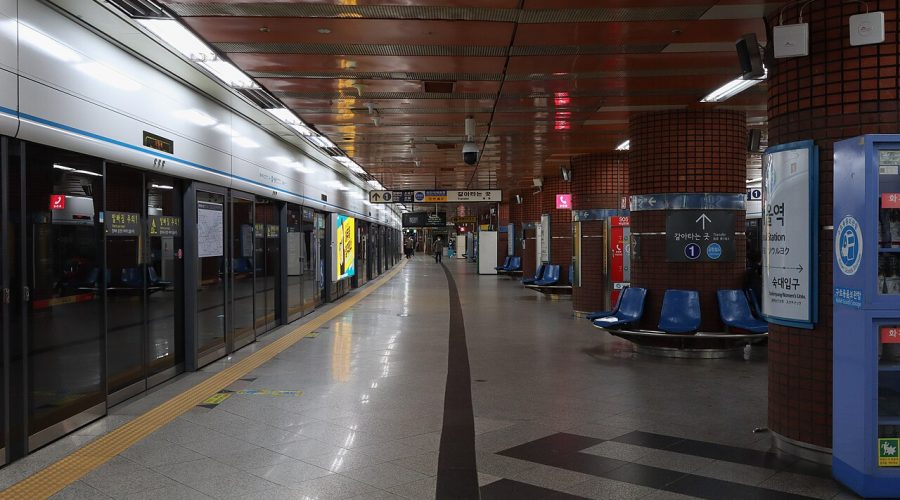
Context photograph: Mobius6, CC BY-SA 4.0. Photograph date: 2023-04-08 20:17:57. Display size adjusted.