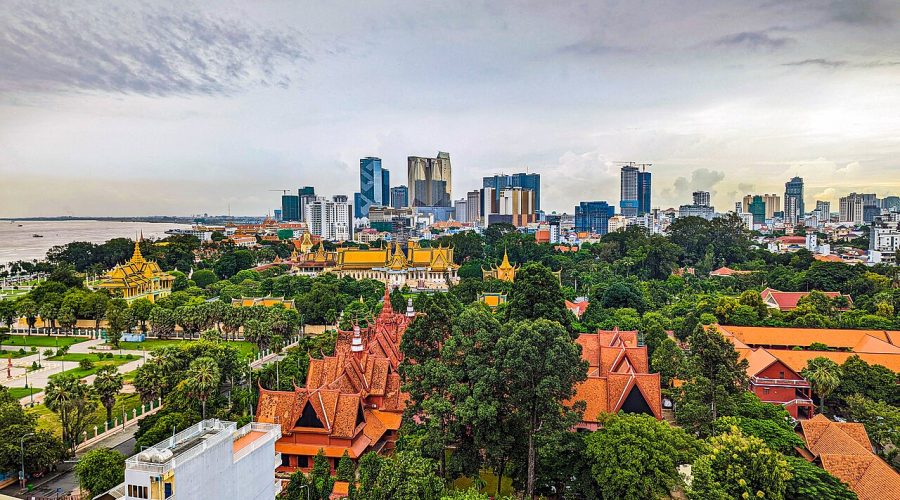
Picture your first afternoon in Phnom Penh when one data plan has to cover the airport, the hotel, and the next city hop
Picture your first afternoon in Phnom Penh after a long flight: you step into the city needing maps, a message to your hotel, and a quick check on tomorrow’s route to Siem Reap. In that moment, the less dramatic your mobile setup feels, the better. This Cambodia eSIM is built for exactly that kind of trip rhythm, with a fixed data plan that keeps working until the purchased data is used up.
📍 Why this plan fits a Phnom Penh-to-Siem Reap trip
This product is most useful when your trip is not just one city stop. The source specifically points to Phnom Penh, Siem Reap, Angkor Wat, Angkor Thom, Tonlé Sap Lake, Sihanoukville, Koh Rong, Kampot, Kep, Battambang, Preah Vihear Temple, and Mondulkiri as recommended destinations.
That makes the plan feel less like a backup and more like trip infrastructure. If your Cambodia itinerary includes a city arrival, then a transfer, then a temple day, you may want one data pool that follows the whole route rather than a daily-reset model that forces you to keep tracking each day’s allowance.
The product description also says it can be used for free travel, business trips, backpack travel, and long-term stays. That is a broad use case, but the useful point is simpler: this is not a voice plan, and it is not a text plan. It is for travelers who want maps, translation, booking tools, and messaging apps in one data-only setup.
📶 What the network setup actually means on the ground
The eSIM connects through the Smart network and provides 4G / 4G LTE service where supported. It is a roaming eSIM that connects to a local affiliated carrier, which matters because you are not swapping a physical SIM card when you arrive.
That convenience comes with a practical condition: the source says you should install the eSIM in advance before leaving the country, but not use it as your mobile data line before arriving in Cambodia. After arrival, you need to select this eSIM as your mobile data line and turn on data roaming to connect normally.
There is also an honest limitation worth keeping in view. The product notes that actual connection speed and quality can vary by region, phone model, supported frequencies, and local network conditions. In major cities and tourist areas such as Phnom Penh, Siem Reap, Sihanoukville, and Battambang, the source says it can be used relatively smoothly. In rural areas, mountainous areas, borders, and long-distance travel sections between islands and cities, the signal may be weak or unavailable.
- Check that your phone supports eSIM.
- Make sure the device is unlocked.
- Install the QR code on one device only.
- Do not delete the installed eSIM profile casually.
- Turn off data roaming on your existing domestic physical SIM if you want to avoid confusion.
🧳 A better way to think about fixed data on a temple-and-city route
The biggest decision with this kind of plan is not just whether you need data, but how you will use it. A fixed-data plan means the full purchased amount is available within the product usage period, and the internet connection ends when that data is used up. It is not a plan that refreshes every midnight or every 24 hours.
That makes it easy to understand, but it also means you should be deliberate. If you expect to rely on maps all day, send frequent photos, use ride-hailing, and keep several chat apps active, you may want to think of this as your main trip connection rather than a light-use backup. The source also notes that connecting a laptop or multiple devices can consume data quickly, even though hotspot and tethering are supported.
For a Cambodia itinerary, the strongest practical fit is a traveler who wants one data supply to cover airport arrival, hotel check-in, city movement, and reservation checks without worrying about separate daily caps. That is especially relevant if you are moving between Phnom Penh and Siem Reap or spending time around Angkor, where you may want offline maps prepared in advance as well as live navigation when the signal allows.
✅ Before you install, make one calm checklist
There is nothing complicated here, but a small amount of preparation avoids the most common missteps. The source is clear that deleted eSIMs may not be reinstallable, and reissue may be restricted, so the profile should be treated as something to keep in place once installed.
It also helps to decide in advance which line will carry data. The product recommends designating only the Cambodia eSIM as the mobile data line locally, while turning off roaming on your existing domestic physical SIM. That is a simple step, but it matters more than people often expect when arriving tired and trying to get online quickly.
If you are planning a route that includes Koh Rong Island, Mondulkiri, Preah Vihear Temple, or the outskirts of Tonlé Sap Lake, the source suggests saving reservation details and offline map information in advance because connectivity can be weaker in those areas or during travel between them. That is less a warning than a sensible travel habit: keep the trip moving even when the signal does not.
If you want a straightforward Cambodia setup for Phnom Penh, Siem Reap, and Angkor without juggling calls or SMS, this product page is the place to confirm the live details before you go. You can review the official listing here and decide whether a fixed data pool matches your route and device.
Context photograph: Mao Piseth, CC BY-SA 4.0. Photograph date: 2022-10-02 09:20:29. Display size adjusted.