HANKATONG CARD: when you want transit money and daily spending to stay in separate lanes
Picture your first afternoon in Korea when you do not want one pocket of money doing two different jobs. You need subway fare for getting around, but you also want a separate balance for coffee, convenience-store stops, and the kinds of small purchases that shape a day on the move.
That is the clearest way to think about HANKATONG CARD. It is one physical card with two separate balances: one for transport and one for spending. The card is prepaid, managed through the HANKATONG app, and sold here as a physical card only. There is no SIM, no eSIM, and no initial top-up balance included in the purchase.
💳 Why separate balances change the way you plan
The main point of this card is not novelty; it is separation. Transport money stays in the transport balance, and everyday purchases stay in the spending balance. That matters when you want one card for the journey but do not want every tap or purchase to pull from the same pool.
For a Korea trip, that distinction can keep decisions simple. If you are heading into the subway, you check the transport balance. If you are paying at a café, restaurant, convenience store, supermarket, shopping centre, duty-free shop, or another supported offline merchant, you use the spending balance instead. The card page is clear that a funded spending balance does not automatically pay your subway fare.
That is the useful mental model here: not “one wallet for everything,” but two lanes with two rules. If you are the kind of traveler who likes a budget to stay visible, this setup makes sense from the start.
📍 What the card can and cannot do on a trip
HANKATONG CARD is designed for use in Korea. On the transport side, the card can be used on supported subways, buses, and taxis that accept it. On the spending side, it is meant for supported offline merchants. Acceptance still depends on the merchant and payment terminal, so the card is best thought of as a practical travel tool rather than a promise that every counter will take it.
That limitation is worth keeping in mind before you rely on it for a full day out. The product information also notes that Korean online stores and delivery apps can have additional payment restrictions. In other words, the card is built for travel routines and everyday in-person spending, not for assuming every digital checkout will behave the same way.
The app is part of the setup, not an afterthought. HANKATONG app functions include card management, supported balance checks, transaction history, available top-up services, and transport-discount applications for eligible children and teenagers. If you are buying for a younger traveler, the required registration must be completed before discounted fares are used.
- Check which balance you need before leaving your hotel or apartment.
- Top up the transport or spending balance separately, depending on the day’s plans.
- Use the app to review balance status and transaction history.
- If a discount applies to a child or teenager, complete the registration first.
🧳 Ordering before you travel, not after you arrive
One of the strongest practical reasons to consider this card is that it can be ordered ahead of time. The current delivery information says the card can be delivered to South Korea, mainland China, and Hong Kong. If you are arranging a trip from one of those places, you can plan around having the physical card ready before you need it.
There are a few details to handle carefully at checkout. The order requires the recipient name, phone number, and full address. Delivery timing depends on destination and carrier, and dispatch is only the handover to the carrier rather than the arrival date. For Hong Kong, the existing delivery adjustment is included in the total shown before payment.
This is also a prepaid product. The listed price is US$7.37 for one physical card, with no subscription, automatic renewal, recurring billing, SIM/eSIM service, activity tickets, or included top-up balance. You are buying the card itself first, then funding the relevant balances when you are ready.
✅ Before you decide if it fits your trip
HANKATONG CARD makes the most sense for a traveler who wants a physical card, separate spending logic, and app-based management in one place. It is not trying to bundle everything together, and that may be exactly why it works for a careful trip budget.
The current card batch is valid through March 2029, and the expiry printed on your card applies. The product page also says opening a basic card account does not require passport or identity-document submission. If you need anything beyond the basic card, such as child or youth fare registration, read the specific service rules before you begin.
Before you order, the practical decision is simple: do you want one card that can handle supported transit and supported everyday purchases in Korea, while keeping the balances separate? If yes, this is the kind of product that helps you avoid juggling cash, a transport balance, and a separate spending budget all at once.
For current service details and the exact product page, View card →
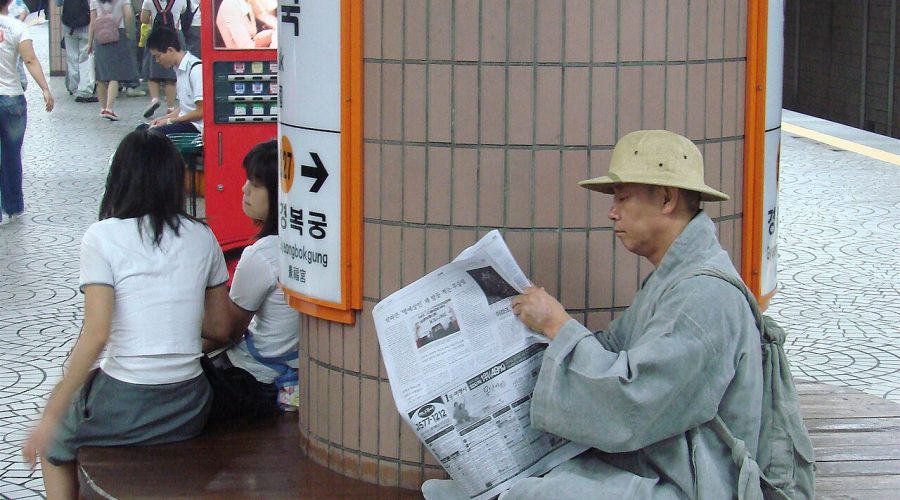
Context photograph: Photocapy (a flickr user)
This photo was taken with Sony DSC-H5, CC BY-SA 2.0. Photograph date: Taken on 16 September 2006. Display size adjusted.