Picture your first afternoon in Japan when your data has to keep going after the busy hours
Picture your first afternoon in Japan after the airport rush has faded and the real day begins: you have a train connection to catch, a meeting point to find, and a dinner reservation saved somewhere in your messages. This is the kind of moment when a physical SIM can feel less like a travel accessory and more like the thing that keeps the day stitched together.
The product page describes this as a Japan physical SIM (USIM) with local network service through IIJ DOCOMO. It is aimed at travelers who want data in Japan without turning the trip into a juggling act between separate apps, cafes, or public Wi-Fi stops. The official product page is here: Japan Physical SIM (USIM).
📶 When you want a stable data day, not a perfect one
Some trips go smoothly only until the first delay. A missed platform, a restaurant search, a map check, or a last-minute translation request can chew through mobile data faster than expected. The appeal of this SIM is not that it eliminates that problem; it is that it gives you a way to keep going after the day’s allowance is used up.
According to the source, you can continue using data at reduced speed even after the provided data for the day is exhausted. The listed QoS is 256kbps. That is not the same as full-speed browsing, but it is the difference between stopping and still being able to handle basic tasks that matter on a travel day.
The product page also notes that ChatGPT, Google, X, Facebook, YouTube, TikTok, Instagram, and KakaoTalk can be used. For a traveler, the important reading is simple: this is a data-first SIM, built around the apps people most often reach for while moving around cities like Tokyo, Osaka, Kyoto, Fukuoka, Sapporo, Nagoya, Okinawa, Hiroshima, or Kobe.
🧳 A better fit for long errands, not just short sightseeing
The recommended usage area list is broad and includes Japan nationwide, with examples such as Tokyo, Osaka, Kyoto, Fukuoka, Sapporo, Nagoya, Okinawa, Hiroshima, Kobe, Universal Studios Japan, Tokyo Disneyland, and the Mount Fuji area. That makes this SIM easy to picture for trips that are not neatly contained in one neighborhood.
It is especially sensible for a day that stretches. If you start in one district, change plans after lunch, and still need maps later in the evening, the “continue at low speed” detail matters. It is also useful for travelers who prefer a local-network option rather than a patchwork of public hotspots.
The validity period is 30 days, which makes the product easier to think about as a trip-length data solution rather than a quick weekend add-on. The source also says the card starts working after it is installed and activated locally, so this is not something to assume will be ready before arrival.
📍 What to check before you order
This SIM is data-only. Voice calls and SMS text messages are not supported, so the right question is not “Can this replace every mobile function?” but “Will data alone cover how I actually move through Japan?” For many travelers, the answer is yes. For others, especially anyone who depends on standard calling or text verification, that limitation is decisive.
Device compatibility matters too. The source says supported models are smartphones released after 2015 when Country Lock was disabled. It also lists unavailable models including smartphones released before 2014, Samsung A3/J1/J2/J3, LG X/V10, Luna Phone, Pantek, and some Sony models. If your phone sits near any of those edges, confirm it before ordering instead of assuming a SIM swap will be straightforward.
- Check that your phone was released after 2015 and is not country-locked.
- Plan for data-only use: no voice calls, no SMS.
- Decide whether hotspot/tethering matters for a laptop or tablet.
- Remember that activation begins locally after installation.
💳 Hotspot use, daily reset timing, and the practical travel rhythm
The source says hotspot and tethering are available. That makes the SIM more flexible for travelers who carry a tablet, need to connect a laptop briefly, or want to share data in a small group. The product page notes there may be speed differences depending on the region and communication environment, which is a useful reminder not to picture every street corner as identical.
Another detail that can shape the day is the reset timing. Data resets daily at 00:00 Japan time (UTC +9). If you activate after arriving at 10 p.m. local time, one day is deducted at midnight, and the data resets automatically each day after that. That is worth knowing if you tend to land late and expect the next morning to begin with a fresh allotment.
That rhythm makes the SIM well suited to a traveler who wants a predictable daily pattern: use what you need, keep moving when the allowance is gone, and avoid the anxiety of having a dead connection at an inconvenient moment. It will not replace every need, but it does make the practical middle of a trip feel less fragile.
✅ When this Japan SIM makes sense
This product is most persuasive for travelers who want a simple, data-only setup for Japan and do not need calls or SMS. It also suits people who value continued low-speed data after the day’s allowance is gone, because that detail can save a day that would otherwise become awkwardly disconnected.
The same logic applies to longer stays, family trips, business trips, backpacking, and itineraries that move between cities or theme parks. If your phone is compatible and your trip depends on maps, messaging, search, and social apps, the product page gives you a clear outline of what to expect.
For live conditions, shipping, and any current purchase details, use the official listing rather than guessing from memory. If the setup matches your phone and your travel style, it is an uncomplicated way to keep Japan days online without having to micromanage every megabyte.
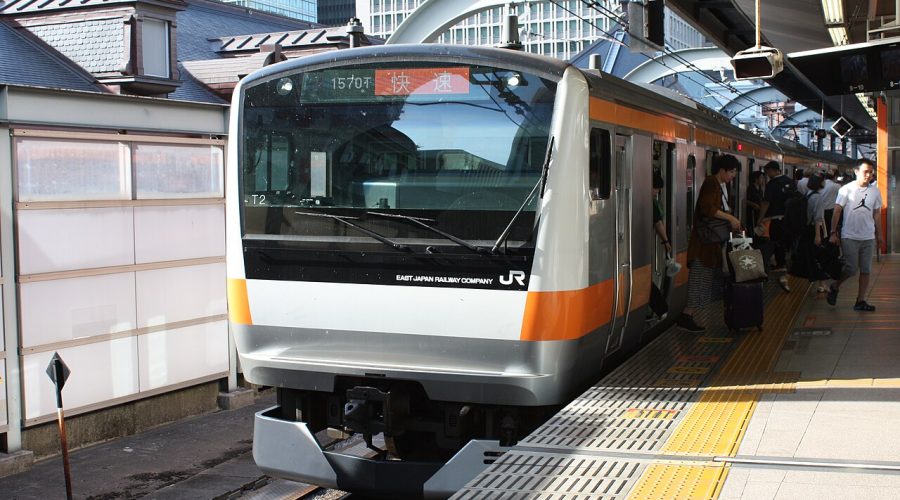
Context photograph: Alexandr3126, CC BY-SA 4.0. Photograph date: 2019-08-09. Display size adjusted.