Picture your first evening in Korea when you want your transit money kept away from your coffee money
Picture your first evening in Korea after check-in, when the day has already asked for a train ride, a convenience-store stop, and one more small purchase you did not plan on. This is the moment when a single wallet system can feel either tidy or confusing. HANKATONG CARD is built for the tidy version: one physical card, but two separate balances for transport and spending.
If your arrival routine in Korea is straightforward, this card can make it feel more deliberate. You can keep a transport balance ready for supported public transport and use the spending balance for supported offline merchants such as restaurants, cafés, convenience stores, supermarkets, shopping centres, and duty-free shops. The appeal is not that it does everything at once, but that it keeps the different parts of a trip from blurring together.
🧳 Why separate balances can matter on day one
A lot of first-night friction comes from one simple question: is there enough money for the next ride, or did that balance get used up somewhere else? HANKATONG CARD answers that by making you top up transport and spending separately. The product page is clear that a funded spending balance does not automatically pay your subway fare.
That separation can be useful if your first evening includes a few small, real-world decisions. Maybe you want to take the subway into the city, then buy a drink, then pay for dinner in a place that accepts the card, and then head back by bus or taxi if supported. Instead of treating all of that as one pile of travel money, you can keep the ride money where it belongs and leave the rest for purchases.
The practical limitation is equally important: acceptance depends on the merchant and payment terminal. The card is described as suitable for supported public transport and offline merchants, but Korean online stores and delivery apps can have additional payment restrictions. So this is a useful card for everyday movement and in-person spending, not a blanket promise for every checkout counter you might encounter.
📍 What to prepare before you use it
The order includes one physical card only. There is no plan, validity option, or SIM choice to make on this product, and there is no initial top-up balance included. That means the card is a base to build on, not a ready-funded pass.
Before your first use, the card page suggests a simple sequence: order the card, enter the recipient name, phone number, and full address at checkout, download the HANKATONG app, and follow the setup instructions when the card arrives. The app is where you manage the card, check balances, view transaction history, access available top-up services, and see eligible transport discounts.
- Confirm which balance you need first: transport or spending.
- Keep your delivery details exact, especially the recipient name and address.
- Use the app to check current card status before relying on it for a ride or purchase.
- If you want child or youth transport discounts, review the registration rules in advance.
That last point matters because eligible children and teenagers can apply for discounted transport fares through the app, but the registration has to be completed before the discounted fare is used. It is not something to assume after you are already at the gate.
💳 How the card fits a real evening out
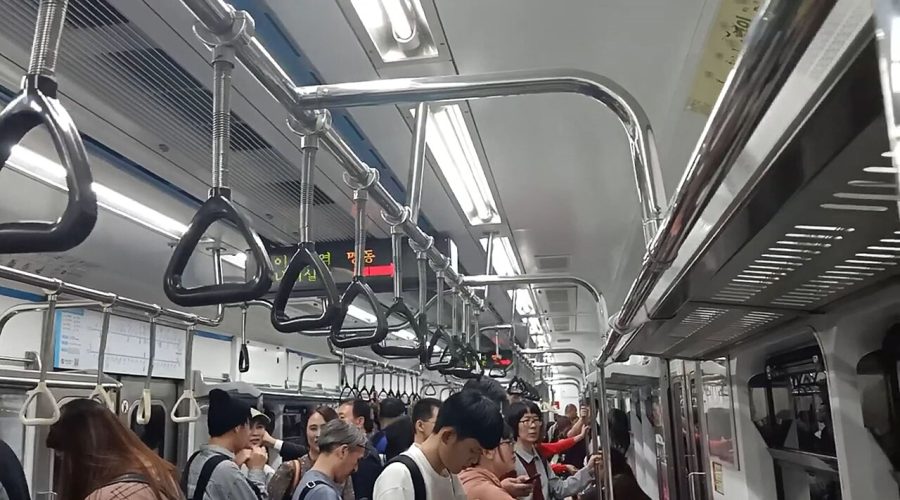
Think of a normal travel evening rather than an idealized one. You leave your hotel, ride into a neighbourhood, stop for coffee, pick up a few things, and then head back. With HANKATONG CARD, the transport side and the spending side stay separate while still living in one physical card, which can simplify the routine of checking out, topping up, and moving on.
It is also worth noticing what the product does not try to be. The card page states that it is prepaid, not a credit card, and that there is no mobile-data service bundled in. If you also need connectivity, the site points you toward separate Korea eSIM and SIM products. If you need activities or tickets, those are purchased separately as well.
For some travelers, that clear separation is exactly the benefit. You are not carrying a catch-all travel package with features you may never touch. You are choosing a physical card for Korea travel use, with the spending and transit pieces handled on their own terms.
✅ When this card makes sense—and when it doesn’t
HANKATONG CARD is most useful if you want a physical card before you start moving around Korea and you prefer to keep ride money and shopping money apart. It also makes sense if you want to manage card services in the app and understand exactly which balance is supposed to pay for what.
It is less useful if you want a bundled data solution, a ticket package, or a one-balance catch-all system. It is also not the product to buy if you want to assume universal acceptance everywhere. The card page repeatedly points readers back to actual app and service details, which is the right reminder: the card is practical, but only within the supported environments it describes.
If that is the kind of setup you want for Korea—one physical card, two separate balances, and a cleaner first evening of errands and transit—the official product page is the place to confirm current service details before ordering.
Context photograph: LMP 2001, CC BY-SA 4.0. Photograph date: 2019-05-04. Display size adjusted.