Picture your first Korea week when transport and spending need different budgets
Picture your first afternoon in Korea when the trip is no longer a quick arrival-and-departure day. You’ve settled in, you need transit for the subway, and you also want a simple way to pay for coffee, a convenience-store stop, and a few offline purchases without treating every expense the same.
That is where HANKATONG CARD makes a different kind of sense: not as a one-use arrival gimmick, but as a practical card for a stay that mixes movement and everyday spending. It is a physical card only, and the useful part is the separation. Transport and spending are managed as two different balances, so the card asks you to decide what each balance is for before you start using it.
💳 Why the separate-balance setup matters
The most useful thing about this card is also the part that needs the most attention: a funded spending balance does not automatically pay your subway fare. The transport balance is for supported public transport payments, while the spending balance is for supported offline merchants.
That distinction sounds simple, but it matters in real life. If you are commuting in the morning and buying lunch later, one balance may be empty while the other still has money. The card makes you think in categories instead of treating everything as one wallet.
For a longer stay, that can be a benefit. You can keep a clear line between travel money and day-to-day spending, instead of wondering where your budget went after a few small purchases.
📍 What the card is meant to cover
According to the product details, the card is for use in Korea and is supported at public transport systems and offline merchants that accept it. The examples listed include restaurants, cafés, convenience stores, supermarkets, shopping centres, and duty-free shops.
The merchant side is helpful, but the product also makes an important limitation clear: acceptance depends on the merchant and the payment terminal. Korean online stores and delivery apps can have additional payment restrictions, so this is best understood as a card for offline, everyday use, not a promise that every checkout will work the same way.
That is why the card suits a stay where your routine is predictable enough to top up in advance, then use the card for the parts of the day that repeat: subway rides, small errands, and ordinary purchases between sightseeing and meals.
🧳 Before you order, decide how you will use it
The card is sold as a one-time purchase with no subscription, automatic renewal, or recurring billing. It does not include a SIM, eSIM, travel ticket, or initial top-up balance. That means the card is only the starting point; you still need to add money to the relevant balance when you are ready.
If you are buying it for a trip, the best decision is not whether the card sounds convenient. It is whether you want a physical payment card with separate balances and app control, or whether your trip would be better served by a different setup. The product itself is clear about that division.
- Plan for both balances separately.
- Use the app to manage the card and check status.
- Confirm the recipient name, phone number, and full address if delivery matters.
The app is also where you handle card management, transaction history, available top-up services, and eligible transport discounts. The product notes that children and teenagers who qualify can apply for discounted transport fares through the app, with the required registration completed before use.
✅ Delivery, support, and the practical fine print
Delivery is offered to South Korea, mainland China, and Hong Kong. The product also says that delivery timing depends on the destination and carrier, and that dispatch means the handover to the carrier rather than the arrival date. If you are ordering for a trip, that distinction is worth keeping in mind so you do not assume the card will appear by a certain day unless the checkout information confirms it.
Support is split in a sensible way. For order or delivery questions, contact AllTripThings. For card use, balance questions, top-ups, or a lost card, use HANKATONG app support. Refund handling also depends on whether you are dealing with the physical order or the card balance, and the relevant service rules apply separately.
One more useful detail: the current card batch is valid through March 2029, and the expiry printed on your card applies. That is not a reason to delay using it, but it is a practical detail if you like to keep travel tools on hand for repeat trips.
If you want a physical Korea card that separates transport from everyday spending, and you are comfortable managing those balances through the app, this product is straightforward. You can review the official listing here and decide whether it fits the way you move through Korea: https://alltripthings.com/product/hankatong-card-basic/.
For readers planning a stay that mixes transit, cafés, and offline shopping, that kind of separation can be exactly the point. You are not buying a bundle of extras. You are buying one card, with two jobs, and the choice to keep those jobs distinct.
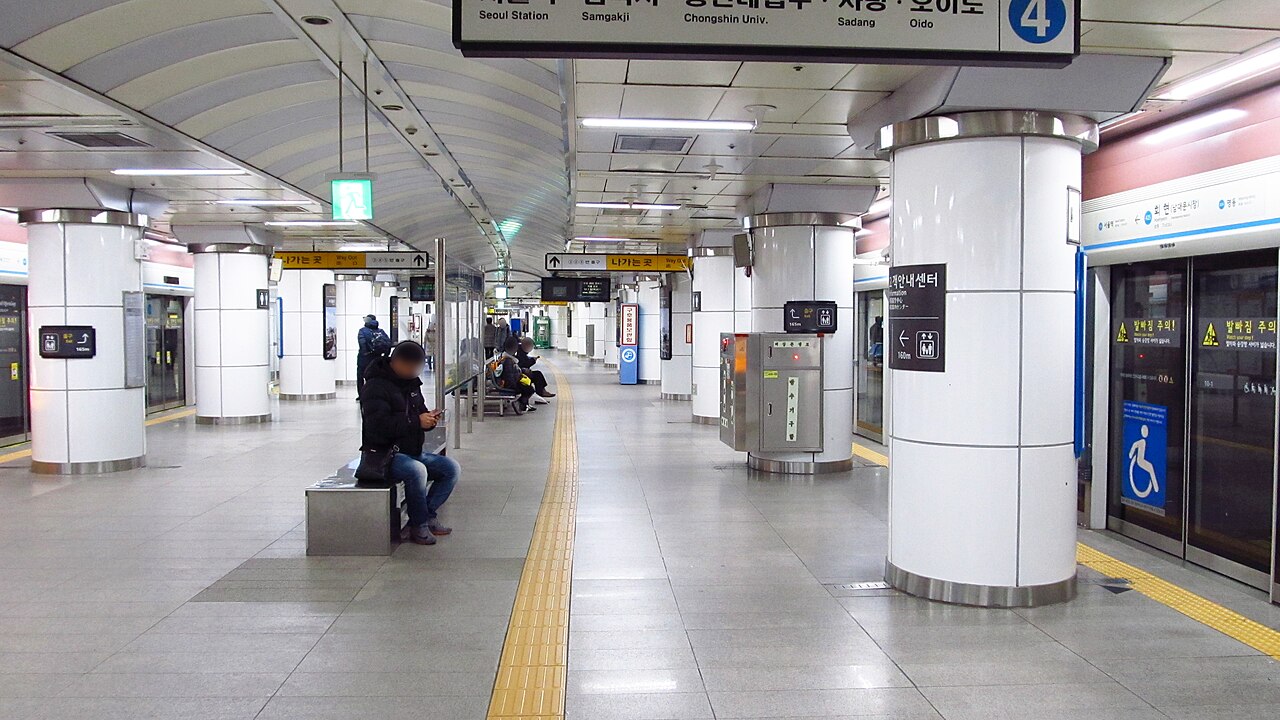
Context photograph: Mobius6, CC BY-SA 4.0. Photograph date: 2023-04-08 20:31:31. Display size adjusted.